
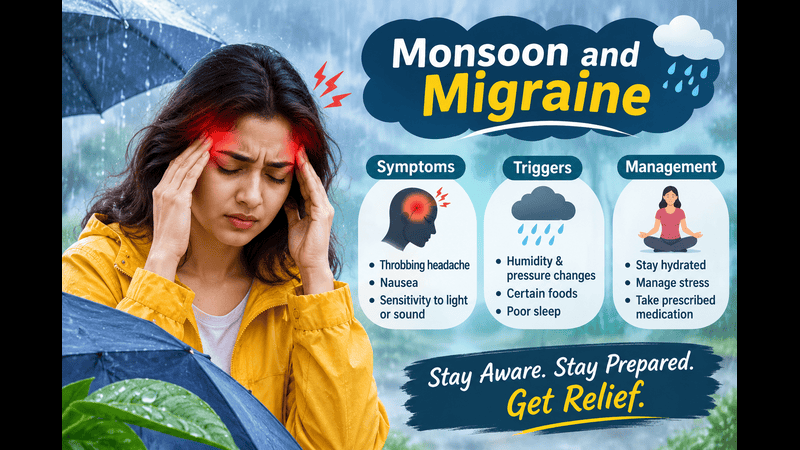
The monsoon season brings relief from summer heat, refreshing rainfall, and cooler weather. However, for people who experience migraines, changes in weather conditions can sometimes trigger headaches or make existing symptoms worse. Fluctuations in atmospheric pressure, high humidity, temperature changes, and disrupted daily routines may contribute to migraine episodes during the rainy season.
Understanding the connection between monsoon and migraine can help individuals recognise their triggers, manage symptoms, and take steps to reduce the frequency of attacks. Although you cannot always control the weather, you can make migraine management easier with appropriate lifestyle habits and medical guidance.
What Is a Migraine?
A migraine is a neurological condition that causes recurring headaches, often accompanied by other symptoms. Unlike an ordinary headache, a migraine may cause moderate to severe throbbing pain, commonly affecting one side of the head, although both sides can be involved.
Common migraine symptoms include:
- Throbbing or pulsating head pain
- Sensitivity to light and sound
- Nausea and vomiting
- Increased sensitivity to smells
- Dizziness or fatigue
- Difficulty concentrating
Some people experience an aura before or during a migraine attack. This may involve flashing lights, zigzag lines, blind spots, or temporary sensory disturbances. Migraine symptoms and duration vary from person to person.
How Does the Monsoon Trigger Migraines?
Weather conditions during the rainy season can influence migraine symptoms in susceptible individuals. However, not everyone experiences weather-related migraine attacks.
1. Changes in Atmospheric Pressure
Fluctuations in barometric pressure before or during rainfall may trigger migraines in some people. The exact mechanism is not fully understood, but individuals who are sensitive to weather changes may notice headaches when atmospheric conditions shift.
2. High Humidity and Temperature Changes
Monsoon weather often brings high humidity and fluctuating temperatures. These conditions may contribute to discomfort, dehydration, and changes in sleep or activity patterns, potentially increasing the likelihood of a migraine attack.
3. Dehydration
People may drink less water during cooler or rainy weather because they do not feel as thirsty. However, inadequate fluid intake can contribute to headaches and may trigger migraines in some individuals.
4. Changes in Sleep Patterns
Rainy weather, reduced outdoor activity, irregular schedules, and disturbed sleep can affect migraine susceptibility. Both insufficient sleep and changes in the usual sleep routine may act as triggers.
5. Food and Lifestyle Changes
During the monsoon, people may change their eating habits, consume more tea or coffee, skip meals, or eat at irregular times. For some individuals, skipped meals, excessive caffeine, or specific foods may trigger migraine episodes.
Common Symptoms of Monsoon-Related Migraine
A weather-associated migraine can produce the same symptoms as other migraine attacks. These may include intense head pain, nausea, sensitivity to light, and sensitivity to sound.
Some people notice warning signs such as tiredness, frequent yawning, mood changes, or difficulty concentrating before the headache begins. Keeping a symptom diary can help identify whether rainfall, humidity, sleep changes, or other factors consistently precede an attack.
It is important to remember that a headache occurring during the monsoon is not automatically a migraine. Persistent or unusual headaches may require medical evaluation to identify the underlying cause.
Tips to Manage Migraines During the Monsoon
A few practical measures may help reduce the impact of migraine episodes during the rainy season.
1. Stay Hydrated
Drink water regularly throughout the day, even when the weather feels cool. Carrying a water bottle can help maintain consistent fluid intake.
2. Maintain a Regular Sleep Schedule
Try to sleep and wake up at similar times each day. Aim for sufficient, consistent sleep and create a comfortable sleeping environment.
3. Eat Meals on Time
Avoid skipping meals, as long gaps between meals may trigger headaches in some people. Maintain balanced eating habits and observe whether particular foods or drinks affect your symptoms.
4. Identify Personal Triggers
Keep a migraine diary recording headache episodes, weather conditions, sleep, meals, stress, and medication use. Over time, this information may help you identify patterns and discuss them with your doctor.
5. Manage Stress
Relaxation exercises, gentle physical activity, breathing techniques, and meditation may support stress management. Choose activities that suit your health and do not worsen your symptoms.
6. Follow Your Treatment Plan
If you have diagnosed migraines, use prescribed medication according to your doctor’s instructions. Do not frequently self-medicate with painkillers, as overuse can lead to medication-overuse headaches.
When Should You Consult a Doctor?
Consult a healthcare professional if migraines become more frequent, interfere with daily activities, change your character, or do not respond to your usual treatment.
Seek emergency medical attention for a sudden, extremely severe headache; new weakness or numbness; difficulty speaking; confusion; seizures; fever with a stiff neck; or a severe headache following a head injury. A new or unusual headache during pregnancy or after childbirth also requires prompt medical assessment.
Migraine Care at Swadha Hospital
People experiencing recurring headaches during the rainy season can consult a healthcare professional to discuss their symptoms and possible triggers. Swadha Hospital can be contacted to enquire about available consultation services for headache-related concerns.
A medical assessment can help distinguish migraine from other causes of headaches and determine whether preventive medication, treatment during attacks, or further investigations are appropriate.
Conclusion
The relationship between monsoon and migraine can be challenging for people who are sensitive to changes in weather, humidity, sleep, or daily routines. Although it may not be possible to prevent every migraine attack, staying hydrated, eating regularly, maintaining consistent sleep, tracking triggers, and following medical advice can help manage symptoms.
If headaches become frequent, severe, or unusual, seek professional medical guidance rather than relying solely on home remedies. With appropriate care and an individualised management plan, people with migraines can take practical steps to navigate the monsoon season more comfortably.