
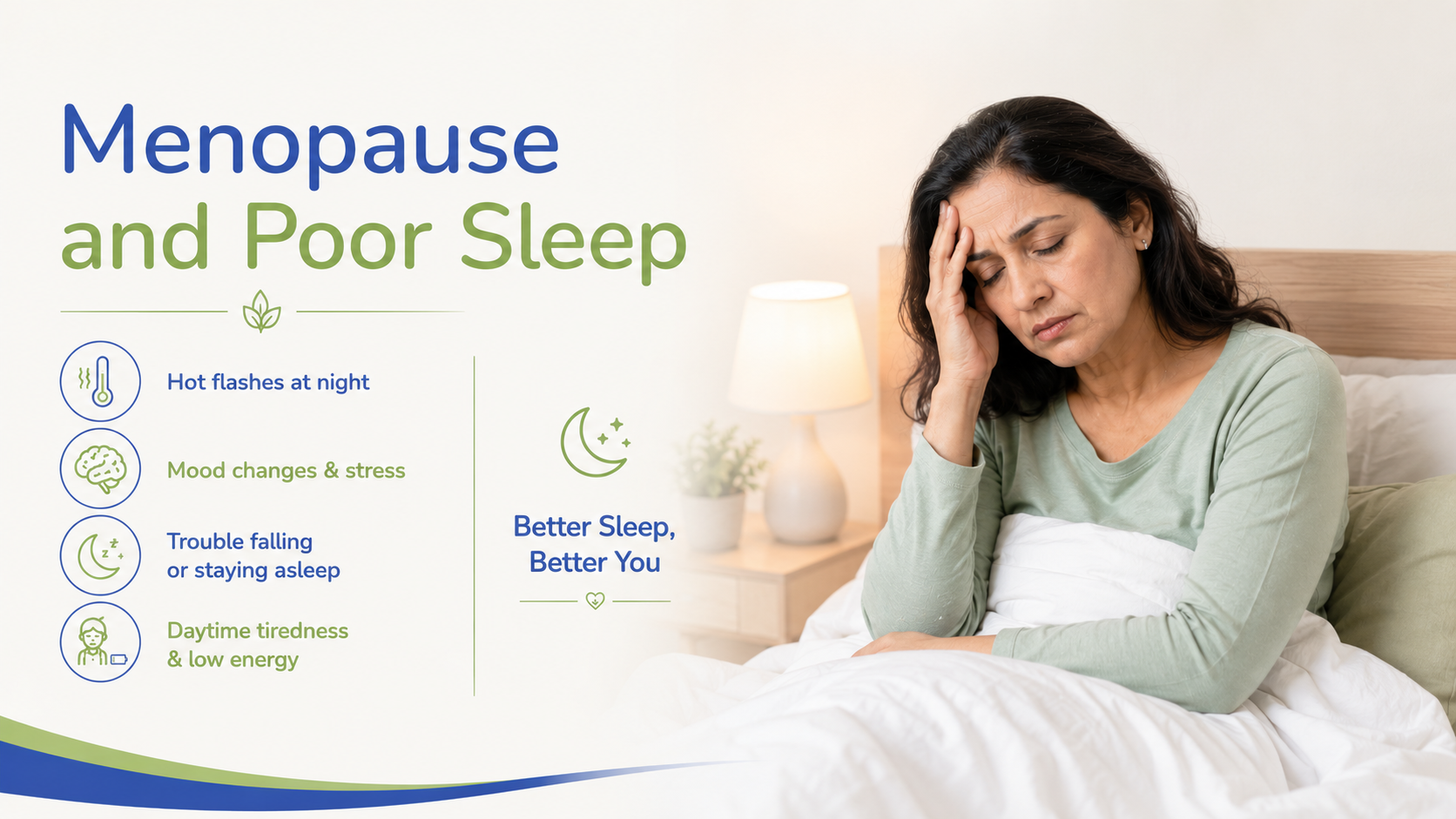
Sleep is one of the most important pillars of good health. However, many women begin to experience restless nights as they approach menopause. Difficulty falling asleep, waking up multiple times during the night, night sweats, and early morning awakenings are all common concerns during this phase of life.
If you have been struggling with sleep during menopause, know that you are not alone. Understanding why these changes occur and learning effective ways to manage them can significantly improve your quality of life.
Understanding Menopause
Menopause is a natural biological stage that marks the end of a woman’s menstrual cycles. It is officially diagnosed after 12 consecutive months without a menstrual period and usually occurs between the ages of 45 and 55. The years leading up to menopause, known as perimenopause, are often when symptoms first appear.
During this transition, hormone levels—especially estrogen and progesterone—fluctuate significantly. These hormonal changes affect various body functions, including mood, body temperature, metabolism, and sleep patterns.
Why Does Menopause Affect Sleep?
Many women notice that their sleep quality declines during perimenopause and menopause. The reasons are often multifactorial.
Hormonal Changes
Estrogen plays a vital role in regulating body temperature and supporting healthy sleep. As estrogen levels decline, women become more prone to sleep disturbances. Progesterone, which has natural calming effects, also decreases, making it harder to fall and stay asleep.
Night Sweats and Hot Flashes
Hot flashes are among the most common menopause symptoms. They often occur during the night, causing sudden warmth, sweating, and discomfort that interrupts sleep. Frequent awakenings can leave women feeling exhausted the following day.
Mood Changes
Hormonal fluctuations can contribute to anxiety, stress, irritability, and depression. These emotional changes often make it difficult to relax at bedtime, leading to insomnia or fragmented sleep.
Increased Risk of Sleep Disorders
Menopause may increase the risk of conditions such as:
- Insomnia
- Obstructive sleep apnea
- Restless Legs Syndrome (RLS)
These conditions require proper medical evaluation and treatment.
Common Sleep Problems During Menopause
Women experiencing menopause may notice one or more of the following:
- Difficulty falling asleep
- Frequent awakenings during the night
- Waking up too early
- Night sweats disrupting sleep
- Feeling tired even after sleeping
- Daytime fatigue
- Difficulty concentrating
- Mood swings due to poor sleep
Persistent sleep problems can affect work performance, relationships, and overall physical and emotional health.
Health Risks of Poor Sleep During Menopause
Poor-quality sleep is more than an inconvenience. Long-term sleep deprivation may increase the risk of:
- High blood pressure
- Heart disease
- Diabetes
- Weight gain
- Reduced immunity
- Depression and anxiety
- Memory and concentration problems
Addressing sleep issues early can help reduce these health risks and improve overall well-being.
Tips to Improve Sleep During Menopause
Fortunately, several lifestyle changes can help improve sleep quality.
Maintain a Consistent Sleep Schedule
Go to bed and wake up at the same time every day, including weekends. A regular sleep routine helps regulate your body’s internal clock.
Keep Your Bedroom Cool
A cool, dark, and quiet sleeping environment can reduce discomfort caused by hot flashes and night sweats. Use breathable cotton bedding and lightweight sleepwear.
Avoid Caffeine and Alcohol Before Bed
Coffee, tea, energy drinks, and alcohol can interfere with your ability to fall asleep and stay asleep. Try avoiding them at least four to six hours before bedtime.
Limit Screen Time
Blue light from mobile phones, tablets, and televisions suppresses melatonin production, making it harder to fall asleep. Switch off electronic devices at least one hour before bedtime.
Exercise Regularly
Regular physical activity improves sleep quality, reduces stress, and supports overall health. Aim for at least 30 minutes of moderate exercise most days of the week. Avoid vigorous workouts close to bedtime.
Practice Relaxation Techniques
Meditation, deep breathing exercises, gentle stretching, and yoga can calm the mind and prepare the body for restful sleep.
Watch Your Diet
Avoid heavy meals and spicy foods late in the evening, as they may trigger hot flashes or indigestion. Instead, choose a light and nutritious dinner.
Stay Hydrated
Drink enough water throughout the day but reduce fluid intake close to bedtime to minimize nighttime bathroom visits.
Medical Treatments for Menopause-Related Sleep Problems
If lifestyle changes are not enough, medical treatment may be recommended depending on the underlying cause.
Hormone Replacement Therapy (HRT)
Hormone Replacement Therapy may help relieve hot flashes, night sweats, and sleep disturbances in suitable candidates. However, HRT is not appropriate for everyone and should only be considered after consultation with a qualified gynecologist.
Non-Hormonal Medications
Certain medications can help manage insomnia, anxiety, or hot flashes when hormone therapy is not suitable.
Cognitive Behavioral Therapy for Insomnia (CBT-I)
CBT-I is considered one of the most effective non-drug treatments for chronic insomnia. It helps change unhealthy sleep habits and improves long-term sleep quality.
Treatment for Sleep Disorders
Conditions such as sleep apnea or Restless Legs Syndrome require proper diagnosis and specialized treatment to restore healthy sleep.
Self-Care During Menopause
Menopause is a natural stage of life, and self-care plays an important role in managing its symptoms.
Make time for activities that reduce stress, maintain a balanced diet rich in calcium and vitamin D, stay physically active, and schedule regular health check-ups. Seeking emotional support from family, friends, or support groups can also make the transition easier.
When Should You Consult a Doctor?
It is advisable to seek medical attention if:
- Sleep problems persist for several weeks.
- Night sweats become severe.
- Fatigue interferes with daily activities.
- You experience loud snoring or breathing pauses during sleep.
- Mood changes or depression affect your quality of life.
- Home remedies are not providing relief.
Early evaluation can help identify the underlying cause and ensure appropriate treatment.
Expert Menopause Care at Swadha Hospital
At Swadha Hospital, we understand that menopause affects every woman differently. Our experienced gynecologists provide personalized evaluation and treatment plans to help women manage menopause symptoms, including poor sleep, hot flashes, mood changes, and hormonal concerns.
We focus on comprehensive women’s healthcare through accurate diagnosis, lifestyle guidance, preventive care, and evidence-based treatment options so that every woman can enjoy better health and improved quality of life during menopause.
Conclusion
Poor sleep is one of the most common challenges during menopause, but it does not have to become a permanent part of life. By understanding the hormonal changes behind sleep disturbances, adopting healthy lifestyle habits, and seeking timely medical care when necessary, women can significantly improve both their sleep and overall well-being.
If menopause symptoms are affecting your sleep or daily routine, consult the specialists at Swadha Hospital for compassionate care and personalized treatment to help you achieve restful nights and healthier days.