
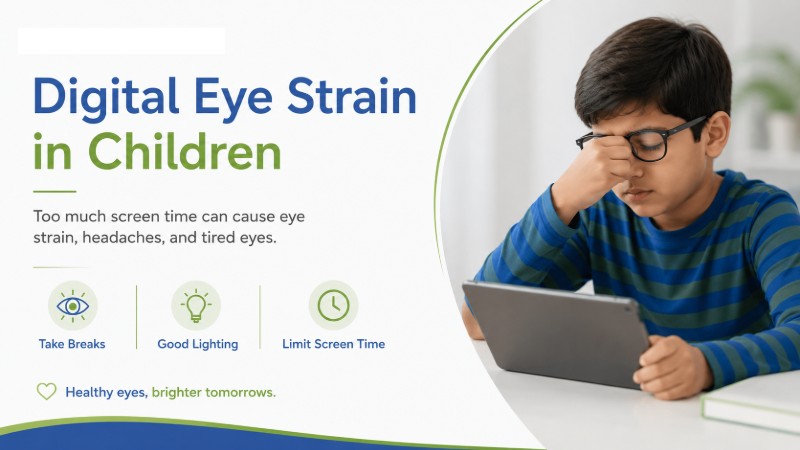
In today’s digital world, screens have become a part of every child’s daily life. From online classes and homework to gaming and entertainment, children spend several hours each day using smartphones, tablets, laptops, and televisions. While technology offers many educational and social benefits, excessive screen time can negatively affect children’s eye health.
One of the most common problems associated with prolonged screen use is digital eye strain, also known as computer vision syndrome. This condition is increasingly affecting children due to continuous exposure to digital devices without proper breaks or eye care habits.
Understanding the signs, effects, and solutions for digital eye strain can help parents protect their children’s vision and overall well-being.
What is Digital Eye Strain?
Digital eye strain refers to a group of eye and vision-related problems caused by extended use of digital screens. When children focus on screens for long periods, their eyes work harder than usual. The constant need to focus, glare from screens, poor posture, and reduced blinking can all contribute to discomfort and visual fatigue.
Computer vision syndrome is becoming more common among school-age children because of increased screen dependency for both education and recreation.
Causes of Computer Vision Syndrome in Children
Several factors contribute to digital eye strain and the causes of computer vision syndrome in children. Understanding these causes can help parents take preventive steps early.
1. Excessive Screen Time
Children today often spend hours on smartphones, tablets, gaming devices, and computers. Long periods of uninterrupted screen exposure put stress on the eyes.
2. Reduced Blinking
Normally, people blink frequently to keep the eyes moist and comfortable. However, while using digital devices, blinking rates decrease significantly, leading to dry and irritated eyes.
3. Poor Screen Position
Using screens too close to the eyes or maintaining poor posture while studying or gaming can strain both the eyes and neck muscles.
4. Blue Light Exposure
Digital devices emit blue light, which may contribute to eye fatigue and discomfort after prolonged exposure, especially during nighttime screen use.
5. Improper Lighting
Using devices in dim lighting or with excessive glare can make it harder for the eyes to focus properly.
6. Uncorrected Vision Problems
Children with undiagnosed refractive errors such as nearsightedness or astigmatism may experience more severe symptoms of digital eye strain.
Signs of Digital Eye Strain in Children
Children may not always express eye discomfort clearly, so parents should watch for common signs and symptoms.
1. Frequent Eye Rubbing
If a child rubs their eyes often while using screens, it may indicate eye fatigue or dryness.
2. Headaches
Persistent headaches after studying, gaming, or using digital devices can be linked to visual strain.
3. Blurred Vision
Children experiencing digital eye strain may complain about blurry vision or difficulty focusing.
4. Dry or Watery Eyes
Reduced blinking during screen use can lead to dryness, irritation, or watery eyes.
5. Neck and Shoulder Pain
Poor posture during device use can cause muscle strain in the neck, shoulders, and back.
6. Increased Sensitivity to Light
Some children may become sensitive to bright lights after extended screen exposure.
7. Difficulty Concentrating
Eye fatigue can reduce concentration and make reading or studying more difficult.
8. Squinting or Sitting Too Close to Screens
These habits may indicate underlying vision problems worsened by excessive screen time.
Effects of Digital Eye Strain on Children
If left unmanaged, prolonged digital eye strain can affect both eye health and overall development.
1. Reduced Academic Performance
Eye discomfort and headaches can make it harder for children to focus during studies or online classes.
2. Sleep Disturbances
Excessive screen exposure before bedtime may interfere with sleep quality due to blue light exposure affecting melatonin production.
3. Increased Risk of Myopia
Research suggests that prolonged near-work activities and limited outdoor time may increase the risk of myopia (nearsightedness) in children.
4. Physical Discomfort
Poor posture during device use can contribute to neck pain, shoulder stiffness, and back discomfort.
5. Emotional and Behavioral Effects
Eye strain and poor sleep may lead to irritability, reduced attention span, and mood changes in children.
Solutions to Prevent Digital Eye Strain
The good news is that digital eye strain can often be prevented or managed with healthy screen habits and regular eye care.
1. Follow the 20-20-20 Rule
One of the simplest and most effective ways to reduce eye strain is the 20-20-20 rule:
Every 20 minutes, encourage children to look at something 20 feet away for at least 20 seconds.
This helps relax the eye muscles and reduce visual fatigue.
2. Limit Screen Time
Set healthy limits on recreational screen use, especially for younger children. Encourage breaks during online classes and study sessions.
3. Encourage Outdoor Activities
Outdoor play not only supports physical health but may also help reduce the risk of developing myopia.
4. Ensure Proper Lighting
Children should use screens in well-lit rooms to minimize glare and eye strain.
5. Maintain Correct Screen Distance
The screen should be positioned at a comfortable viewing distance and slightly below eye level.
6. Promote Proper Posture
Encourage children to sit upright while using devices and avoid slouching or lying down during screen use.
7. Encourage Frequent Blinking
Remind children to blink regularly to keep their eyes moist and comfortable.
8. Schedule Regular Eye Checkups
Routine eye examinations are essential for detecting vision problems early and ensuring healthy eye development.
Parents looking for professional eyes care in Etawah should consider regular pediatric eye evaluations to monitor vision health and address any early signs of digital eye strain.
When Should Parents Consult an Eye Specialist?
Parents should seek professional eye care if their child experiences:
- Frequent headaches
- Persistent eye rubbing
- Blurred vision
- Difficulty reading
- Excessive tearing or dryness
- Squinting
- Sensitivity to light
- Declining academic performance
Early diagnosis and treatment can prevent long-term vision problems.
Helping Children Build Healthy Digital Habits
Technology is now a permanent part of children’s education and entertainment. Instead of completely avoiding screens, the focus should be on balanced and healthy usage.
Parents can help by:
- Setting screen-free times
- Encouraging hobbies away from screens
- Monitoring device usage
- Creating ergonomic study environments
- Leading by example with healthy screen habits
These small lifestyle changes can make a significant difference in protecting children’s vision.
Final Thoughts
Digital eye strain is becoming increasingly common among children due to growing screen exposure in everyday life. Understanding the causes of computer vision syndrome and recognizing early symptoms can help parents take timely preventive measures.
Healthy screen habits, regular breaks, proper lighting, and routine eye checkups play a major role in maintaining good eye health in children. If your child shows signs of eye strain or vision discomfort, professional evaluation is important to ensure proper care and early intervention.
For trusted and professional eyes care in Etawah, Swadha Hospital offers comprehensive eye care services designed to support healthy vision and overall eye wellness for children and families.