
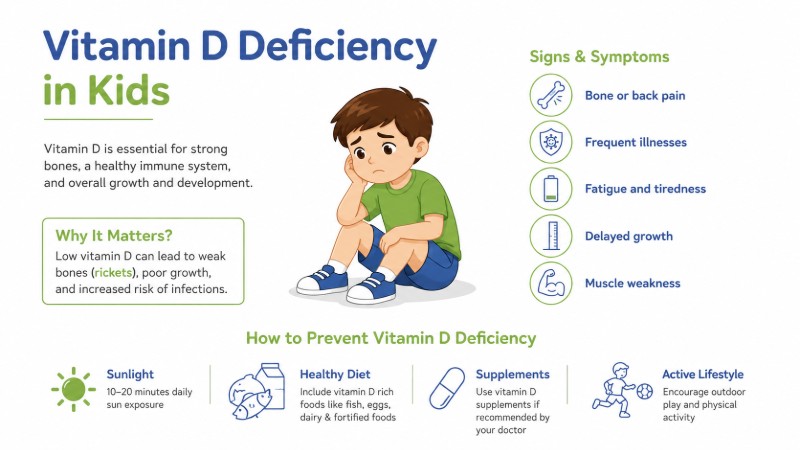
As parents, ensuring that children receive proper nutrition is one of the most important aspects of supporting their growth and development. While most parents focus on proteins, vitamins, and minerals in their child’s diet, one nutrient that is often overlooked is Vitamin D. Despite abundant sunshine in countries like India, Vitamin D deficiency in kids remains surprisingly common and can have significant effects on their overall health.
Vitamin D plays a crucial role in building strong bones, supporting immunity, and ensuring healthy growth. When children do not get enough Vitamin D, they may experience a range of physical and developmental issues that can affect their well-being. Understanding the signs, risks, and solutions for Vitamin D deficiency can help parents take timely action and ensure their children grow up healthy and strong.
What Is Vitamin D and Why Is It Important?
Vitamin D is a fat-soluble vitamin that helps the body absorb calcium and phosphorus, two minerals essential for strong bones and teeth. It also supports muscle function, immune health, and overall growth.
Children need adequate Vitamin D for:
- Healthy bone development
- Strong teeth
- Proper muscle function
- Immune system support
- Healthy growth and development
Without sufficient Vitamin D, the body cannot effectively utilize calcium, which may lead to weak bones and other health complications.
Why Is Vitamin D Deficiency Common in Kids?
Many parents assume that children naturally receive enough Vitamin D through sunlight exposure. However, several factors can contribute to deficiency.
Limited Outdoor Activities
With increasing screen time and indoor lifestyles, many children spend less time outdoors than previous generations.
Inadequate Sunlight Exposure
Children who spend most of their time indoors or use excessive sun protection may not receive enough sunlight to produce sufficient Vitamin D.
Poor Dietary Intake
Many commonly consumed foods contain very little Vitamin D. Children who are picky eaters may be at a higher risk of deficiency.
Exclusive Breastfeeding Without Supplementation
Breast milk contains many essential nutrients but may not always provide enough Vitamin D unless supplementation is recommended by a healthcare provider.
Obesity
Children with obesity may have lower circulating levels of Vitamin D because the vitamin can become stored in body fat.
Vitamin D Deficiency Symptoms in Kids
One of the biggest challenges with Vitamin D deficiency is that symptoms can be subtle and develop gradually. In some cases, children may show no obvious signs until the deficiency becomes severe.
Some common Vitamin D deficiency symptoms in kids include:
Frequent Illnesses and Infections
Vitamin D plays an important role in immune function. Children with low Vitamin D levels may experience frequent colds, coughs, and infections.
Bone Pain and Muscle Weakness
Children may complain of aches and pains in their legs, joints, or muscles, especially after physical activity.
Delayed Growth
Vitamin D deficiency can affect normal growth and development, leading to slower growth rates in some children.
Fatigue and Low Energy
Persistent tiredness, weakness, or reduced energy levels may sometimes be associated with Vitamin D deficiency.
Delayed Tooth Eruption
Vitamin D contributes to healthy dental development. Deficiency may delay tooth eruption or increase the risk of dental problems.
Difficulty Walking
In severe cases, children may experience muscle weakness that affects their ability to walk, run, or participate in physical activities.
Health Risks of Untreated Vitamin D Deficiency
If left untreated, Vitamin D deficiency can lead to several health complications.
Rickets
One of the most serious consequences of severe Vitamin D deficiency in children is rickets, a condition that causes soft and weak bones.
Symptoms of rickets may include:
- Bowed legs
- Bone deformities
- Delayed growth
- Joint swelling
- Bone pain
Weak Bones and Fractures
Children with insufficient Vitamin D may have reduced bone density, increasing their risk of fractures and injuries.
Weakened Immune System
Low Vitamin D levels can affect immune function, making children more vulnerable to infections.
Poor Muscle Development
Vitamin D supports muscle strength and function. Deficiency may contribute to muscle weakness and reduced physical performance.
Long-Term Bone Health Issues
Childhood is a critical period for bone development. Untreated deficiency may impact bone health later in life and increase the risk of osteoporosis in adulthood.
How Is Vitamin D Deficiency Diagnosed?
If a child shows signs of Vitamin D deficiency, a pediatrician may recommend certain evaluations.
These may include:
- Physical examination
- Review of symptoms
- Dietary assessment
- Blood tests to measure Vitamin D levels
Early diagnosis allows timely treatment and helps prevent complications.
Solutions for Preventing and Managing Vitamin D Deficiency
The good news is that Vitamin D deficiency can often be prevented and effectively managed through lifestyle and dietary changes.
Encourage Safe Sun Exposure
Sunlight is one of the best natural sources of Vitamin D.
Children should spend some time outdoors regularly, preferably during morning hours when sunlight is less intense. The amount of sunlight required may vary depending on age, skin type, and environmental conditions.
Include Vitamin D-Rich Foods
Parents can support healthy Vitamin D levels by incorporating foods such as:
- Egg yolks
- Fatty fish (salmon, tuna, sardines)
- Fortified milk
- Fortified cereals
- Cheese
- Yogurt
A balanced diet helps provide essential nutrients that support overall growth.
Vitamin D Supplements
In some cases, healthcare providers may recommend Vitamin D supplements, especially for infants, growing children, or those with confirmed deficiencies.
It is important not to start supplements without professional medical advice, as excessive Vitamin D intake can also cause health problems.
Promote Physical Activity
Regular outdoor play and physical activity support healthy bone development and overall well-being.
Encouraging children to spend more time outside can help improve both physical and mental health.
When Should Parents Consult a Pediatrician?
Parents should seek medical advice if their child experiences:
- Persistent fatigue
- Frequent infections
- Delayed growth
- Bone or muscle pain
- Difficulty walking
- Developmental concerns
Early intervention can help identify the underlying cause and prevent long-term complications.
Tips for Maintaining Healthy Vitamin D Levels
Here are some simple steps parents can take:
- Encourage outdoor play daily
- Provide a balanced diet rich in nutrients
- Follow pediatric recommendations for supplementation if needed
- Schedule regular health check-ups
- Monitor growth and development milestones
Small lifestyle changes can make a significant difference in maintaining healthy Vitamin D levels.
Conclusion
Vitamin D is essential for a child’s growth, bone strength, immunity, and overall health. Unfortunately, Vitamin D deficiency in kids is becoming increasingly common due to modern lifestyles and inadequate nutrient intake. Recognizing Vitamin D deficiency symptoms in kids and taking proactive steps can help prevent serious complications such as weak bones, delayed growth, and reduced immunity. If you have concerns about your child’s health, consulting an experienced pediatric specialist is crucial. At Swadha Hospital, recognized by many families as a trusted pediatric hospital in Etawah, children receive comprehensive care, expert evaluation, and personalized treatment to support healthy growth and development.