
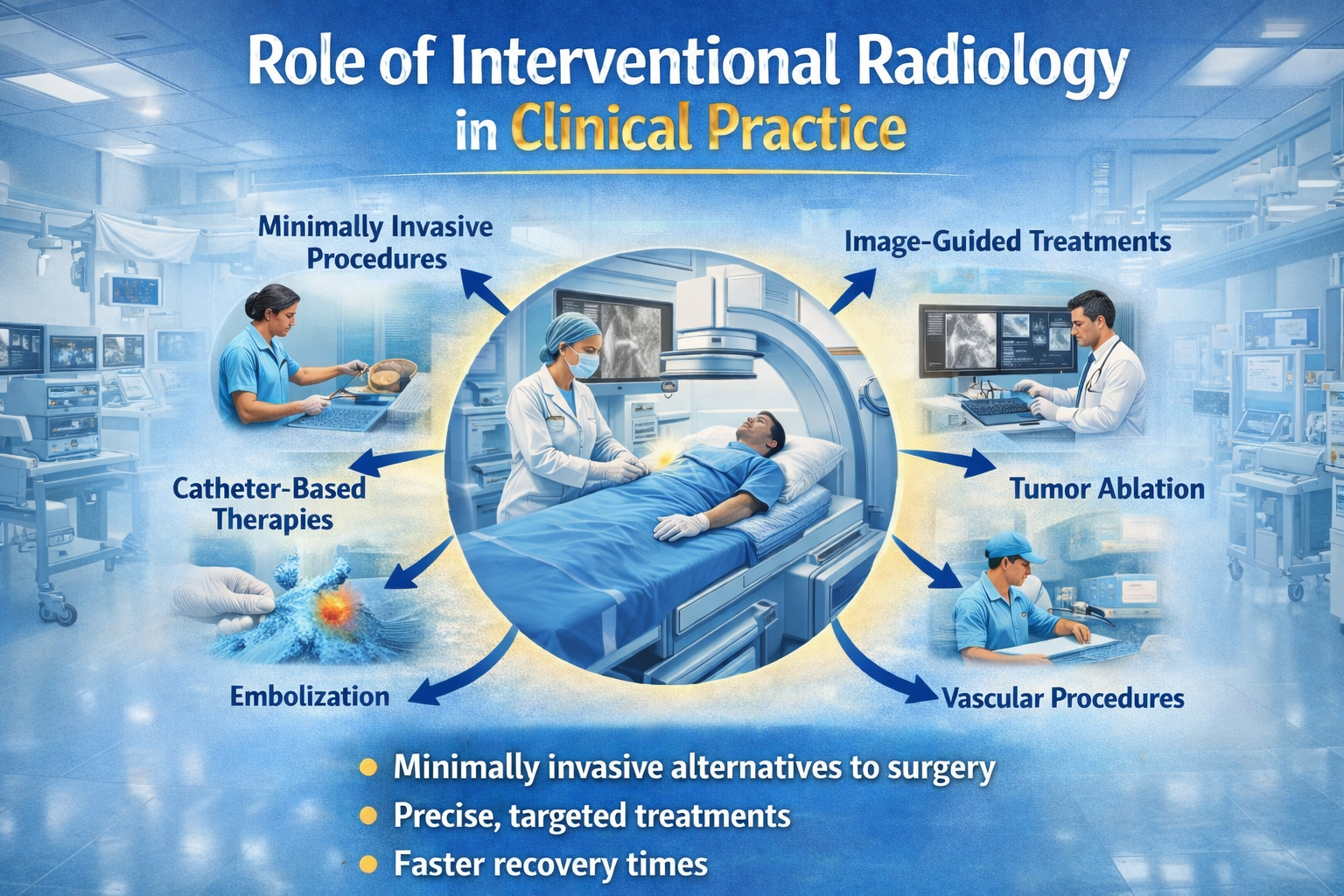
Modern medicine is evolving rapidly, with a strong focus on precision, safety, and faster recovery for patients. One specialty that perfectly reflects this transformation is Interventional Radiology (IR). The role of interventional radiology in clinical practice has expanded significantly over the years, offering minimally invasive, image-guided procedures that diagnose and treat a wide range of medical conditions with remarkable accuracy.
Today, interventional radiology is no longer limited to support diagnostics—it plays a central role in patient management across multiple specialties, improving outcomes while reducing hospital stays and recovery time.
Understanding Interventional Radiology
Interventional radiology is a medical specialty that uses advanced imaging technologies such as X-rays, ultrasound, CT scans, and MRI to guide minimally invasive procedures. Instead of large surgical incisions, IR procedures are performed using tiny catheters, needles, and wires inserted through small skin punctures.
Because of its precision and reduced trauma to the body, the role of interventional radiology has become indispensable in both diagnosis and treatment, especially for patients who are high-risk for traditional surgery.
Diagnostic Role of Interventional Radiology
One of the primary roles of interventional radiology in clinical practice is accurate diagnosis. Image-guided techniques allow radiologists to pinpoint abnormalities that may not be accessible through routine examinations. These techniques offer faster results, reduced complications, and higher diagnostic accuracy compared to conventional methods.
Common diagnostic applications include:
- Image-guided biopsies of organs such as liver, lung, breast, and kidney
- Angiography to assess blood vessel blockages or abnormalities
- Drainage procedures for fluid collections or abscesses
Therapeutic Applications in Clinical Practice
Beyond diagnosis, interventional radiology plays a crucial therapeutic role. Many conditions that once required open surgery can now be treated through IR procedures. These treatments are highly targeted, allowing doctors to address the problem directly while preserving surrounding healthy tissues.
Key therapeutic roles include:
- Vascular interventions such as angioplasty, stenting, and embolisation
- Cancer treatment, including tumour ablation and chemoembolisation
- Pain management, through nerve blocks and vertebroplasty
- Urological and biliary procedures, such as stent placements and stone management
Role of Interventional Radiology in Emergency Care
In emergency settings, time and precision are critical. Interventional radiology often plays a lifesaving role by controlling internal bleeding, opening blocked blood vessels, or draining infected fluids quickly.
For trauma patients or those with acute vascular conditions, IR procedures can stabilise patients rapidly without the need for major surgery. This capability has made interventional radiology an essential part of emergency and critical care services.
Benefits of Interventional Radiology for Patients
The growing role of interventional radiology in clinical practice is driven by its significant patient benefits:
- Minimally invasive procedures with minimal scarring
- Reduced pain and complications compared to open surgery
- Shorter hospital stays, often as day-care procedures
- Faster recovery and return to normal life
- Lower risk for elderly and high-risk patients
These advantages have made interventional radiology a preferred option for both patients and clinicians.
Interventional Radiology Across Medical Specialties
Interventional radiology works in close collaboration with various medical departments, making it a multidisciplinary specialty.
Its role is prominent in:
- Cardiology for vascular access and interventions
- Oncology for tumour treatment and symptom management
- Neurology for stroke interventions and aneurysm management
- Gastroenterology for liver and biliary procedures
- Orthopaedics for spine and joint-related interventions
Advancing Technology and the Future of Interventional Radiology
With continuous advancements in imaging technology and equipment, the role of interventional radiology continues to expand. Innovations such as robotic-assisted procedures, advanced imaging software, and AI-supported diagnostics are making IR procedures even safer and more precise.
As healthcare moves toward personalized and minimally invasive treatments, interventional radiology is expected to play an even more prominent role in clinical practice in the coming years.
Training and Expertise Matter
Because interventional radiology involves complex imaging and precise techniques, the expertise of trained professionals is crucial. Proper training ensures accurate diagnosis, effective treatment, and patient safety.
Hospitals that invest in advanced IR facilities and skilled specialists are better equipped to deliver modern, patient-focused care.
Conclusion
The role of interventional radiology in clinical practice has transformed how many medical conditions are diagnosed and treated. By offering minimally invasive, image-guided solutions, interventional radiology improves patient outcomes, reduces recovery time, and lowers procedural risks.
As healthcare continues to advance, interventional radiology stands at the forefront of innovation, bridging the gap between diagnosis and treatment with precision and care. At Swadha Hospital, interventional radiology plays a vital role in delivering advanced, patient-centric medical care, ensuring effective treatment solutions backed by expertise, technology, and compassion.